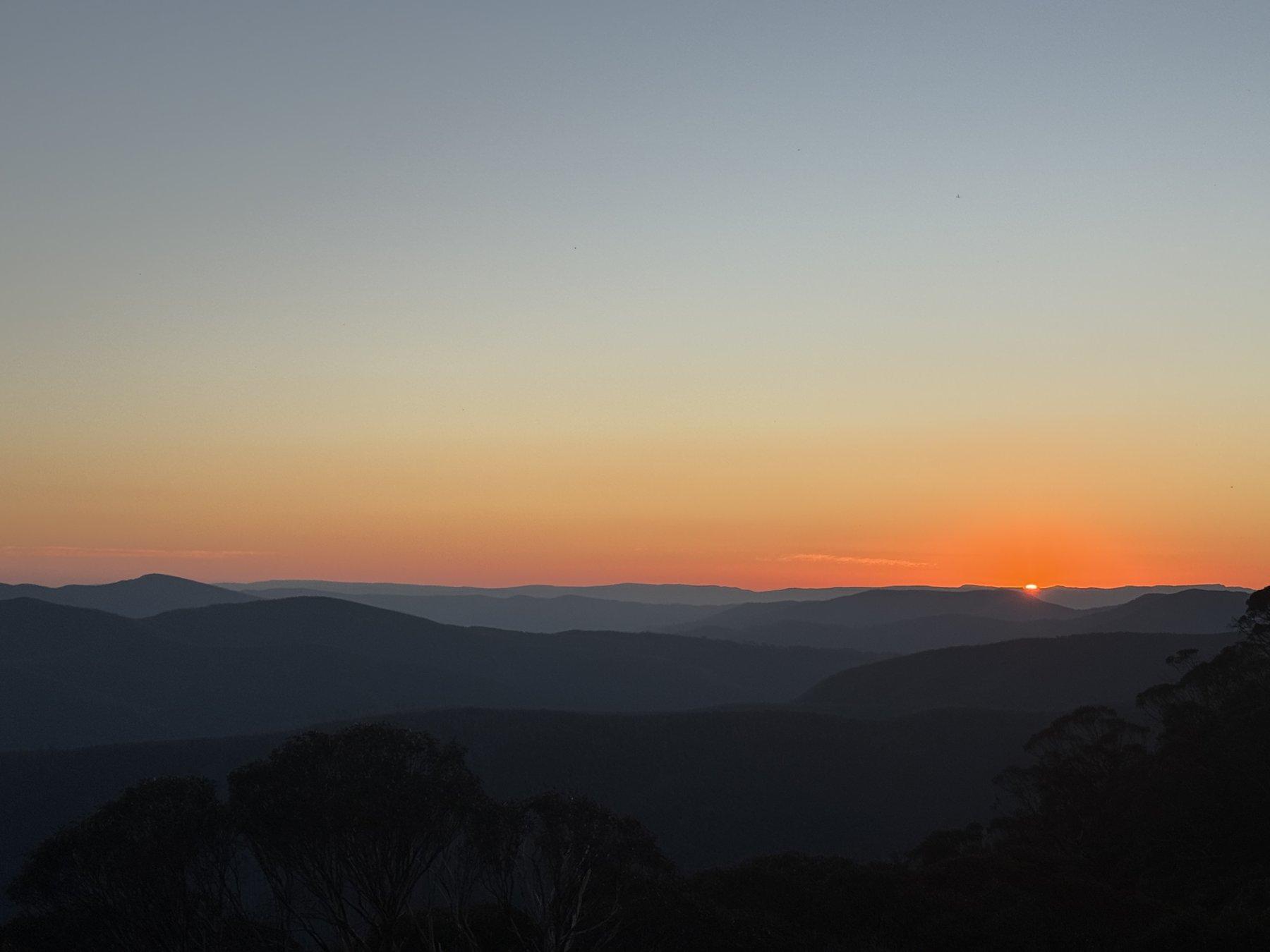
Sombering.
Day thirteen of a thirty-day fast. Day five out of Sydney. A hundred and seventy kilometres of dirt and sealed alpine road, climbing all day from the Nariel Valley to the highest road in Australia. A flipped car at the historic-site sign, and a strap wound through the spokes.
The short version
Day thirteen of a fast. Day five out of Sydney. A hundred and seventy kilometres of mixed-surface alpine road from a free camp on Wheeler Creek through the gold town of Omeo to the summit at Mount Hotham — 1,825 metres, the highest sealed road in Australia. Two events change the colour of the day. A flipped car at a historic-site sign before lunch. A strap that comes loose in the spokes after lunch. The trip stops being abstract.
I had been talking, all morning, about how one small thing ends a trip. The tank bag in the wrong place. A strap that has worked itself loose. The wrong eye-line through a corner. Geometry plus inattention. The way that adventure motorcycling is mostly the slow, boring management of small risks one at a time, and what makes it look like an adventure on the internet is the moments when the management briefly fails. I was very pleased with the sentiment, sitting on Hunter in the morning light at Stacey’s Bridge, looking at a tank bag I had not yet moved. The day delivered on it twice. (The shorter, theme-side companion to the day is at Sombering.)
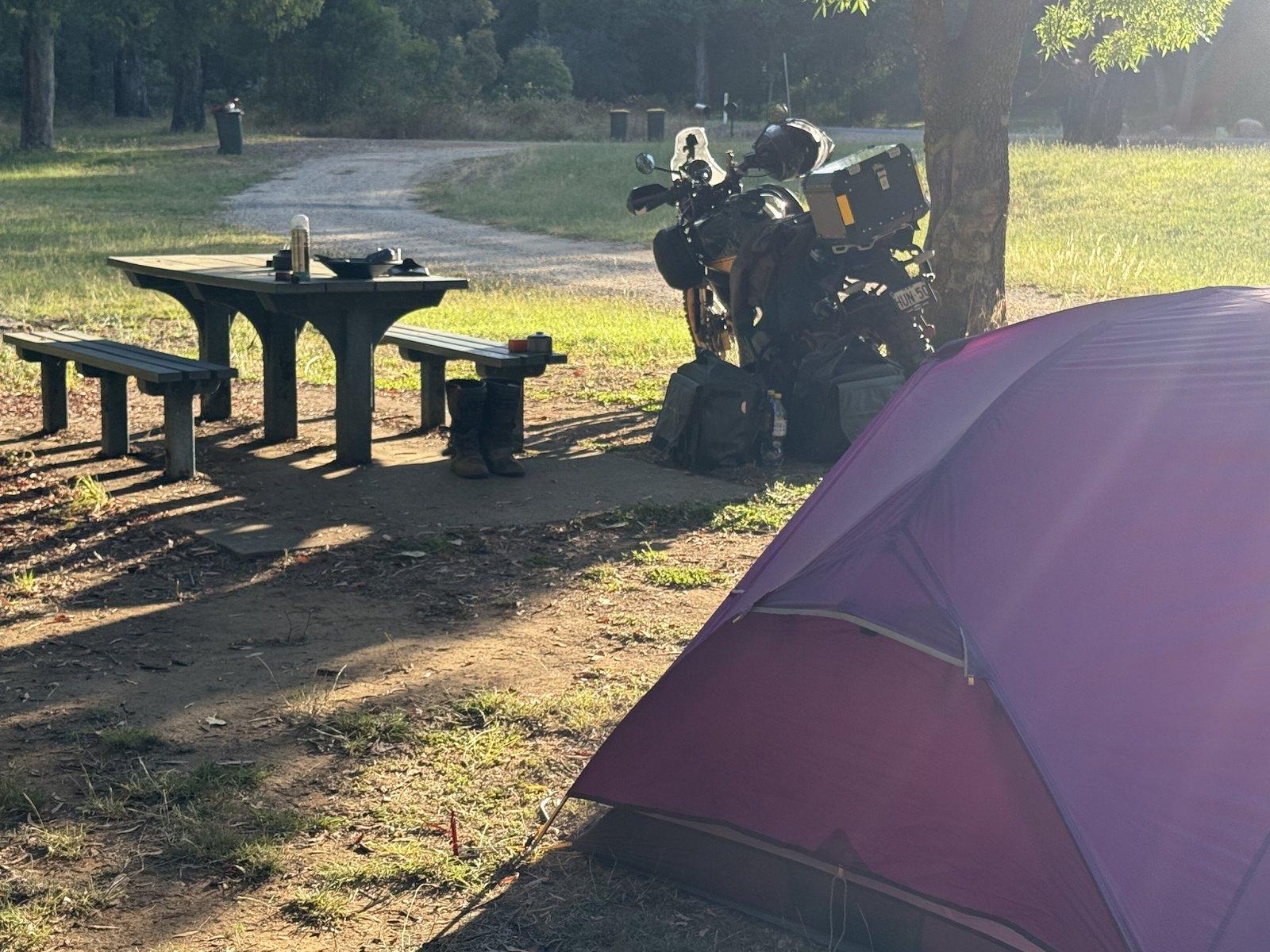
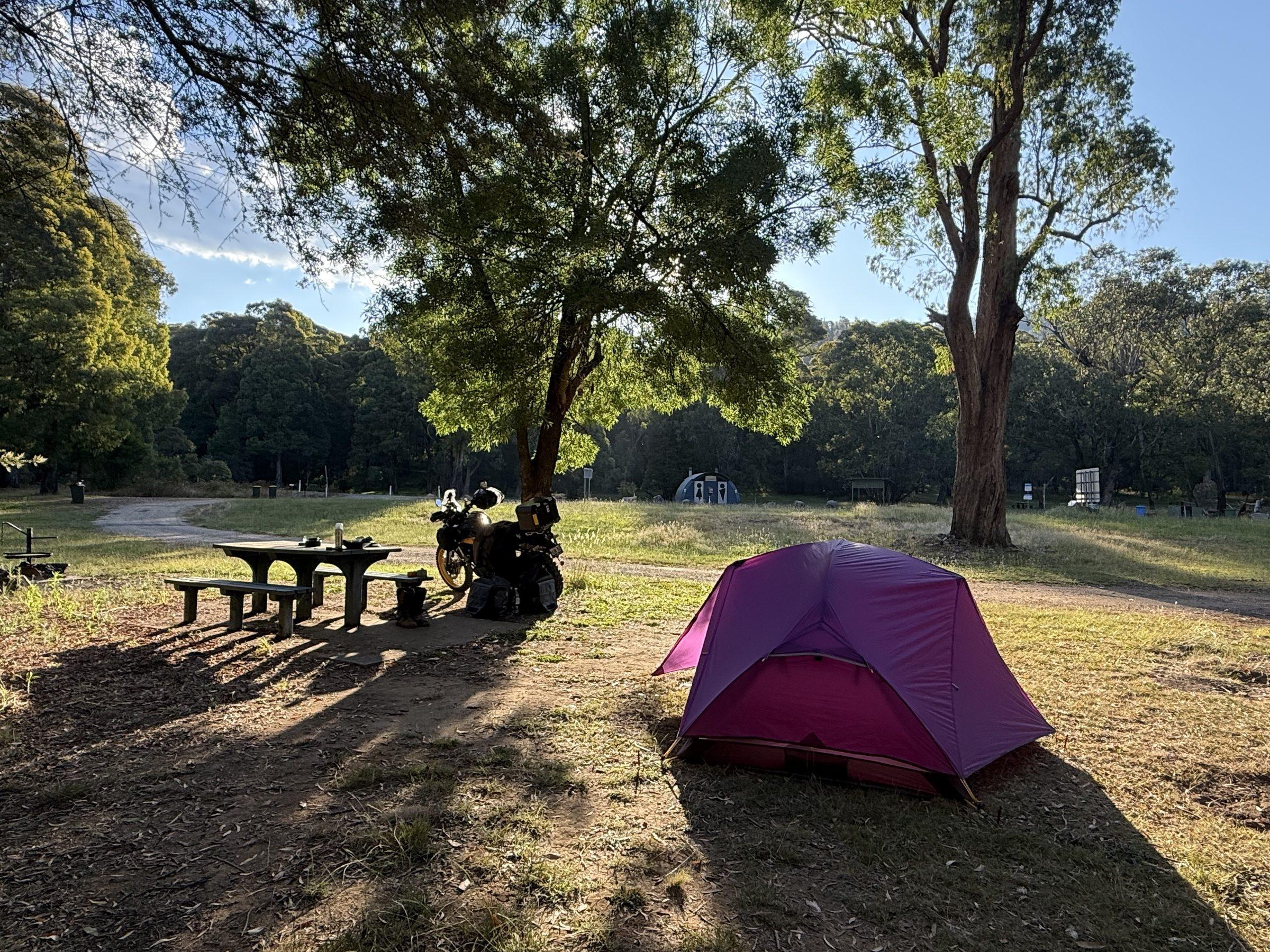
The camp on Wheeler Creek the morning of the ride. Tank bag still in the wrong place. Tank bag about to be in the wrong place for the entire morning, in fact.
Out of Stacey’s Bridge at a little before nine. Two hot waters in the kettle — still all I’m taking on day thirteen of the fast I started in March — the tent down, the bike loaded, the strap that holds the tank bag onto the back seat tightened the way I have been tightening it for the last twelve days. Past tense, retrospectively important. Not tightened well enough.
The road out of the Nariel Valley is the kind of dirt road that does not look like an adventure on the internet — well-graded, mostly straight, the kind of surface you can do at eighty without thinking. The hills on either side were worked for gold from the eighteen-sixties through the Depression: Sunny Point, Sassafras Creek, Saltpetre, Cribbage. Walking country older than the road, and the road is older than most roads in the country. The cattle ignore me. The dogs do not.
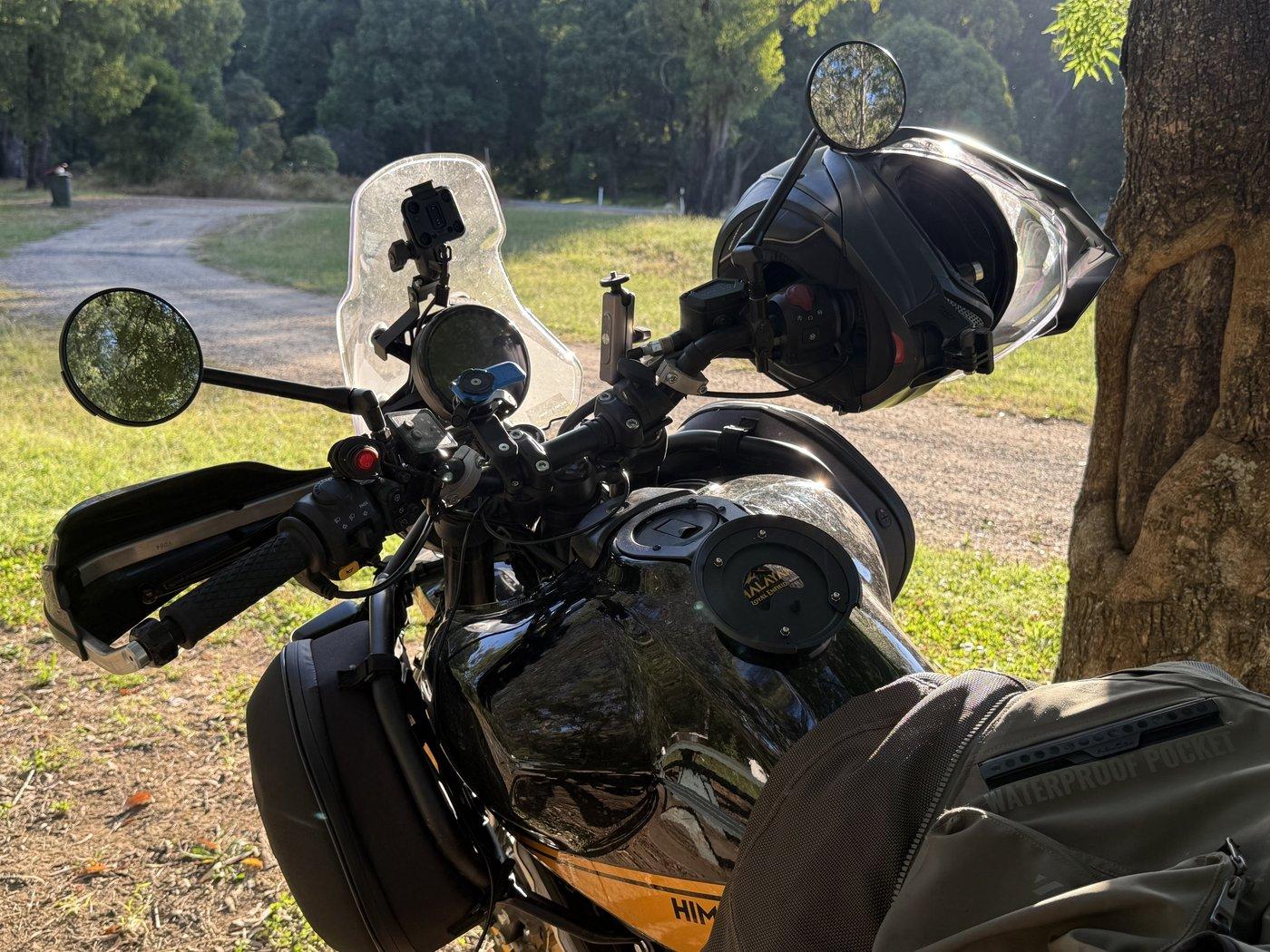
The cockpit. Camera on the mount, helmet on the bar. The brake fluid level is fine. The strap is not fine, and I do not yet know.
The flipped car is at the historic-site sign on the way into Omeo. Roof down on the verge. Four wheels in the air. A thin spray of glass and trim picked clean into the grass. The driver has walked away — I find that out at the next stop — but the car has been left where it sat, the way they leave them on country roads in this part of the world, and you ride past it the way you ride past a memorial. Slow. Without looking too long. Without looking too short.
One small mistake. That’s the line.
I had been talking, all morning, about not having one. The universe’s response, sitting at the historic-site sign with its four wheels in the air, is hard to argue with. I roll into Omeo and find a cafe with a kelpie under the table and a tin roof and a hot tea you can have on day thirteen of a fast, and I sit for twenty minutes and look at the photos I have just taken and decide not to put them on the internet, and I get back on the bike.
The Great Alpine Road climbs out of Omeo in long, sweeping turns. The kind of road you can stay in fourth on for twenty minutes at a time. The kind of road I love and have been thinking about for the better part of a week. The strap comes loose somewhere in the first ten kilometres. I do not notice for the first kilometre. I do notice the noise the second kilometre — a small tick, then a small slap, the sound of something light hitting something hard on each revolution — and I pull off at the next clear shoulder.
The strap that holds the tank bag to the back seat has come loose at one corner. I find it wrapped twice around two of the rear spokes. If it had caught at speed, the wheel would have locked. Best case: shredded spokes, a bent rim, a bike that does not roll out of here without a flatbed. Worst case: I am on my back in the gravel watching it slide away from me on the same road as the car at the sign. The strap is undamaged. The spokes are undamaged. I have used up some quantity of luck I did not know I had a balance on.
I had just been talking about how one small mistake ends a trip. Then I did exactly the opposite.
I unwrap the strap. I unclip both bags from the back. I sit on the verge for ten minutes and look at the rear wheel. Then I tie the bags down a different way — under the load, not over it, so the failure mode is different. The next two hours of riding are the slowest two hours I’ve done in months. The thing about looking at a line you almost crossed is that you do not, for some time afterward, ride the way you rode before.
Mount Hotham in summer is one of the strangest places I’ve ridden into. A ski resort at thirty-five degrees has the geometry of a ski resort and none of the purpose — lift towers running to nothing, hire shops shuttered, a single pub with a couple of cars and a stray dog outside. The road in winds up the spine of the range with twenty-kilometre views in both directions. The bike does it well. The bike does it the way the bike does everything: not quickly, not slowly, just steadily.
At one thousand eight hundred and twenty-five metres the air is fifteen degrees cooler than it was in Omeo. I park outside the lookout, walk fifty metres to the edge, and find the kind of view that pays for the whole day in one go. Ridges stacked all the way to the horizon, the colour of the sky lowering toward orange, the sun on the side of the bike where I tied the bags differently.
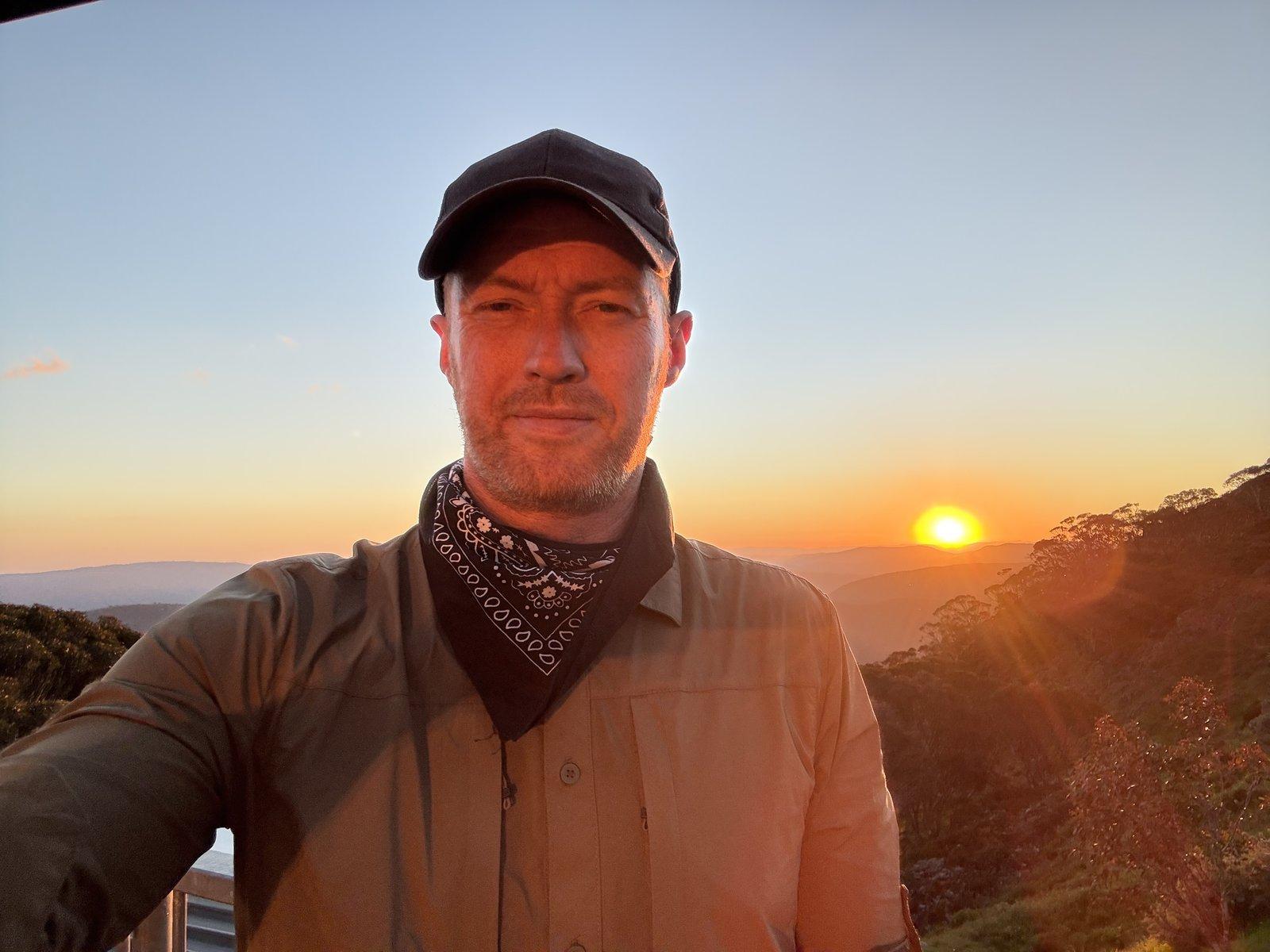
Sunset at Hotham. The light at one thousand eight hundred and twenty-five metres does something to the day that the rest of the day did not.
The line is exactly where the line has always been. I just got to look at it.
The pub at the village has a hot tea and a fireplace running for the season’s ghost guests. I sit on the deck and watch the colour come out of the sky in long bands across the ranges. The bike clicks its heat into the evening. The tea is the best tea I have had in weeks. Day thirteen of a fast, day five out of Sydney, a hundred and seventy kilometres of road I will remember in pieces. A flipped car. A strap. A bend.
Tomorrow I go down out of the mountains through Dargo and start the long flat slide toward Geelong, where the ferry waits. The tank bag is tied down a different way. There will be more adjustments. There always are. Sombering, I think, is what it’s called when the universe shows you the line you are riding next to, and you realise you have been riding next to it for longer than you thought.
A written companion to Australian Alps Solo on a Himalayan 450 — Episode 9 on the Motorcycle Seat Wisdom YouTube channel.
Related reading
Sombering.
A word I said into the helmet mic without thinking, riding past a flipped car at the historic-site sign. The whole day after that is named for it.
The day the brain caught up.
The previous day. Two hundred and thirty kilometres through the Snowy Mountains to camp on Wheeler Creek. The slow business of stopping being at work.
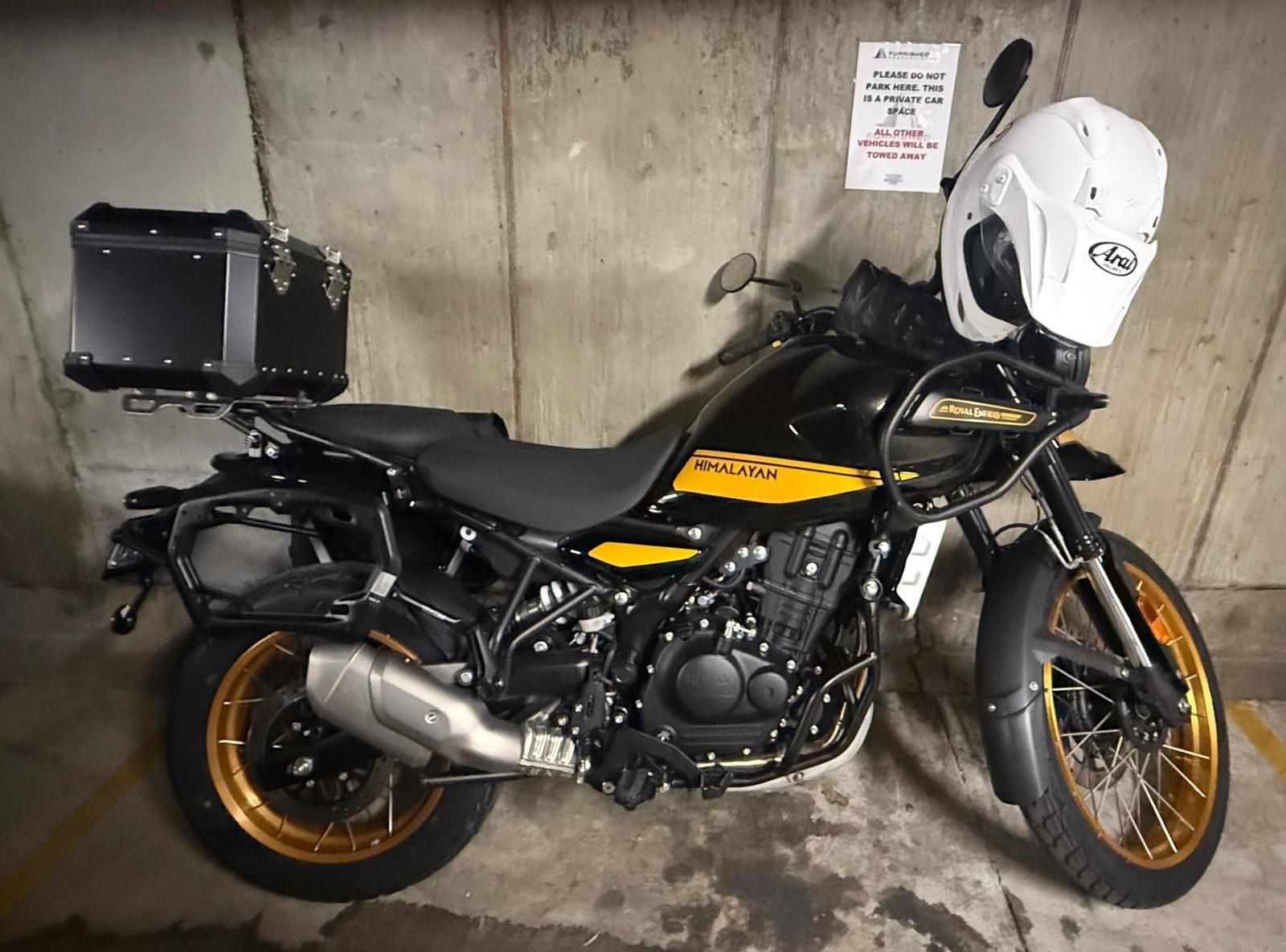
Hunter — what’s running, what’s broken.
The 2025 Royal Enfield Himalayan 450, dirt-shod for the long road. Every change, every dollar, and the small mechanical regrets.
Get the next one
Twice a month. The next verdict and the next journey land here first — photographs, and where I’m headed next.