Ten books for the tank bag.
A reading list for adventure motorcyclists, in roughly the order I would press them on someone new to the seat.
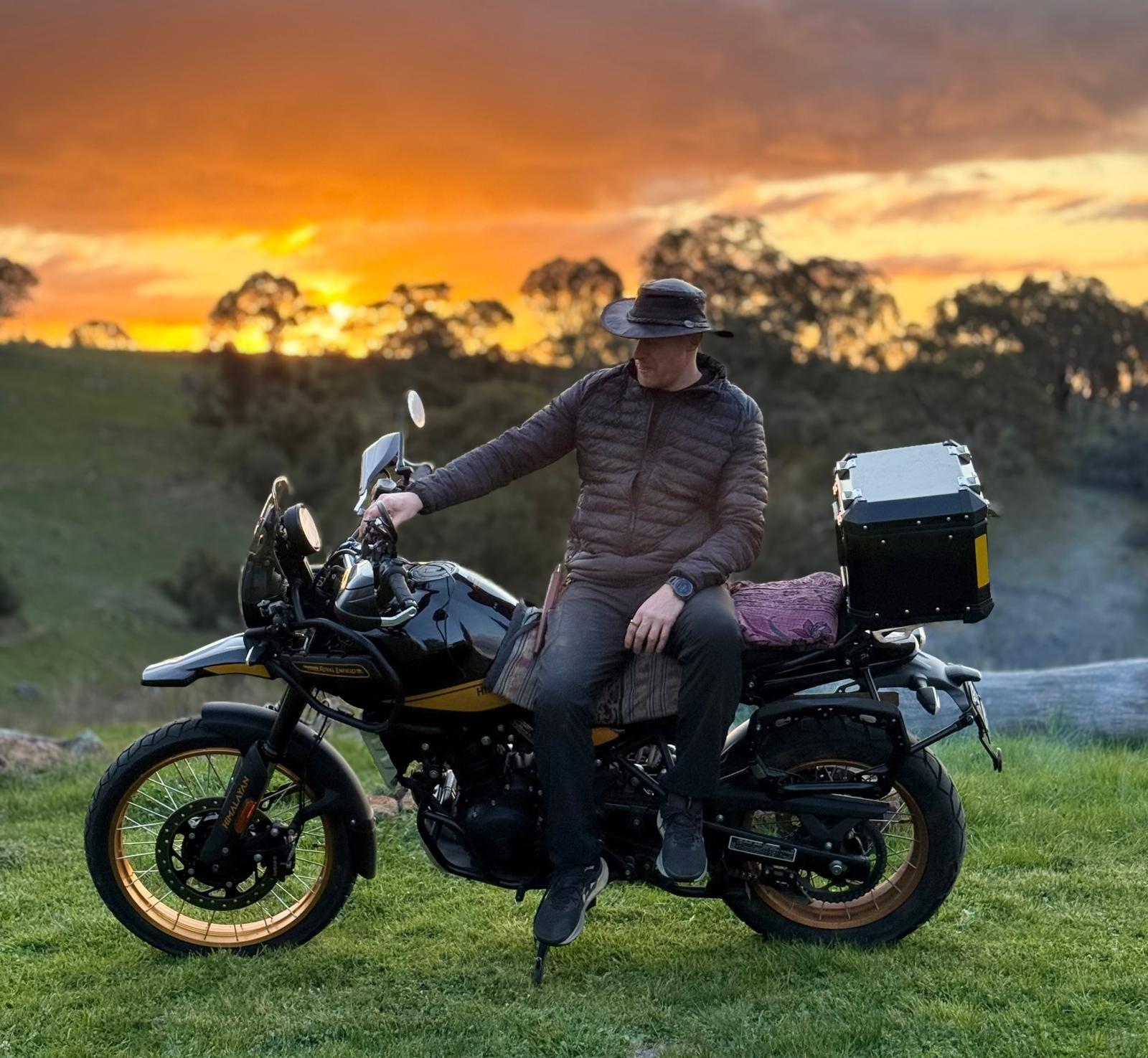
A good book on a long trip is half the kit. I do not mean the technical manual or the field guide — useful, but the wrong shape. I mean the book you read at dusk in a folding chair while the kettle takes its time, the book that the body of the trip puts into context and the book that, in turn, puts the trip into context. These are the ten that have done that work for me.
1. Jupiter’s Travels — Ted Simon (1979)
Four years, seventy-eight thousand miles, a Triumph Tiger 100, and a former Sunday Times foreign correspondent who realised somewhere over Africa that the trip was not really about the trip. The book that more or less invented the modern adventure-travel memoir. Simon is a generation older now and the prose has aged the way a good leather pannier ages. Read this first. Read it slowly. Notice that the riding is rarely the foreground.
2. Zen and the Art of Motorcycle Maintenance — Robert Pirsig (1974)
Not really about motorcycles. Not really about Zen. A father and son ride west across the United States on a Honda Super Hawk, and the father, a former rhetoric professor with a psychiatric history, narrates a long argument with a part of himself he calls Phaedrus about the nature of quality. The first half is the better half. The frame story — kid on the back, summer light, gas station coffee — is one of the great American road sequences in any genre. Skip the chautauquas if they bog you down and come back to them on the second read. There is a second read.
3. The Perfect Vehicle — Melissa Holbrook Pierson (1997)
The single best book on the question of why anyone rides. Pierson is a critic by trade, a Moto Guzzi rider by temperament, and the book is a kind of confessional essay on falling in love with the wrong machine and refusing to repent. She is funny in the dry American way and unsparing about the parts of motorcycling culture that deserve no defence. If you have ever tried to explain the appeal to someone who does not get it, you will find your better arguments here.
4. Ghost Rider — Neil Peart (2002)
The Rush drummer lost his nineteen-year-old daughter in a road accident and his wife to cancer ten months later, and rode fifty-five thousand miles around North and Central America on a BMW R1100GS in the years that followed. The book is the journal of that ride. It is the most honest book about grief I have read in any form, and the bike is its only available metaphor. Difficult and worth it. Do not read it on a long trip if you are already at the wobbly end of your own emotional kit.
5. Lois on the Loose — Lois Pryce (2007)
Anchorage to Ushuaia on a 225cc Yamaha Serow, by an English former BBC producer with a wry deadpan that does most of the heavy lifting. The bike is comically too small. The kit is cheap. The trip works. The reason the book matters is that Pryce never inflates anything — she gets into trouble, she gets out of it, and she does not turn either fact into a parable. The book that finally talked me out of buying anything bigger than a Himalayan.
6. Into Africa — Sam Manicom (2002)
First of Manicom’s four-volume circumnavigation, written from the diaries he kept on a BMW R80GS through every bit of Africa that had a road and several bits that did not. Manicom is the best practical writer on long-distance solo travel I have read — he tells you how the kit failed, how he fixed it, how the visa office worked, what the bribe cost. The romance is in the specifics. Read this one if you are about to do something hard.
7. 10 Years on 2 Wheels — Helge Pedersen (1998)
The visual one. Pedersen is Norwegian, a photographer first and a rider second, and the book is the picture record of his decade on a BMW R80GS through seventy-seven countries. A coffee-table object. Read the captions. The image of his bike on a log raft on the Darién Gap is the picture that has lived in the head of every aspirational round-the-world rider for a generation. Worth its weight in panniers, although heavier than is sensible to actually take on the bike.
8. In Patagonia — Bruce Chatwin (1977)
Not a motorcycle book. Chatwin walked, hitched, and bussed through Patagonia in the mid-seventies and wrote a book that has shaped almost every travel writer since who has paid attention. The reason it belongs on this list is that it is the cleanest available example of how to write about a place — short chapters, no padding, the writer almost entirely absent, the people and the landscape doing the talking. The model. Read it before you start writing your own trip up.
9. Meditations — Marcus Aurelius (~170 AD)
The original tank-bag book. Marcus was the Roman emperor, fighting on the Danube frontier for most of the period in which he wrote these notes — he was, in effect, on a long trip in difficult country, talking to himself in the small hours. The text is nothing more than the private notebook of a tired man trying to keep himself honest, which is exactly what makes it useful at the end of a hard riding day. Read the Hays translation. Skip the first book and come back to it — the others land harder once the rhythm is in your ear.
10. Why We Sleep — Matthew Walker (2017)
The science book on the list, and the one most likely to keep you riding into your sixties. Walker is a sleep scientist at Berkeley and the book is his case for taking sleep as seriously as the rest of your kit. The chapters on motor learning, caffeine, and alcohol are the ones that change a touring habit immediately. I wrote a longer review at Why We Sleep, and what it has to do with the bike — if you read one of these ten with the express aim of not putting the bike down, this is the one.
The honourable mention is Brave New World — Aldous Huxley (1932). Not on the list because it is not a travel book. It is the book that changed my mind most about what slow travel is for, and the review is at Brave New World, and the small protest.
The companion piece is Ten films for the long evening — the same exercise, with a screen instead of a paperback.
Get the next one
Twice a month. The next verdict and the next journey land here first — photographs, and where I’m headed next.