Why We Sleep, and what it has to do with the bike.
Matthew Walker on the science of sleep, and what eight hours has to do with not putting the bike down at the end of a long day.
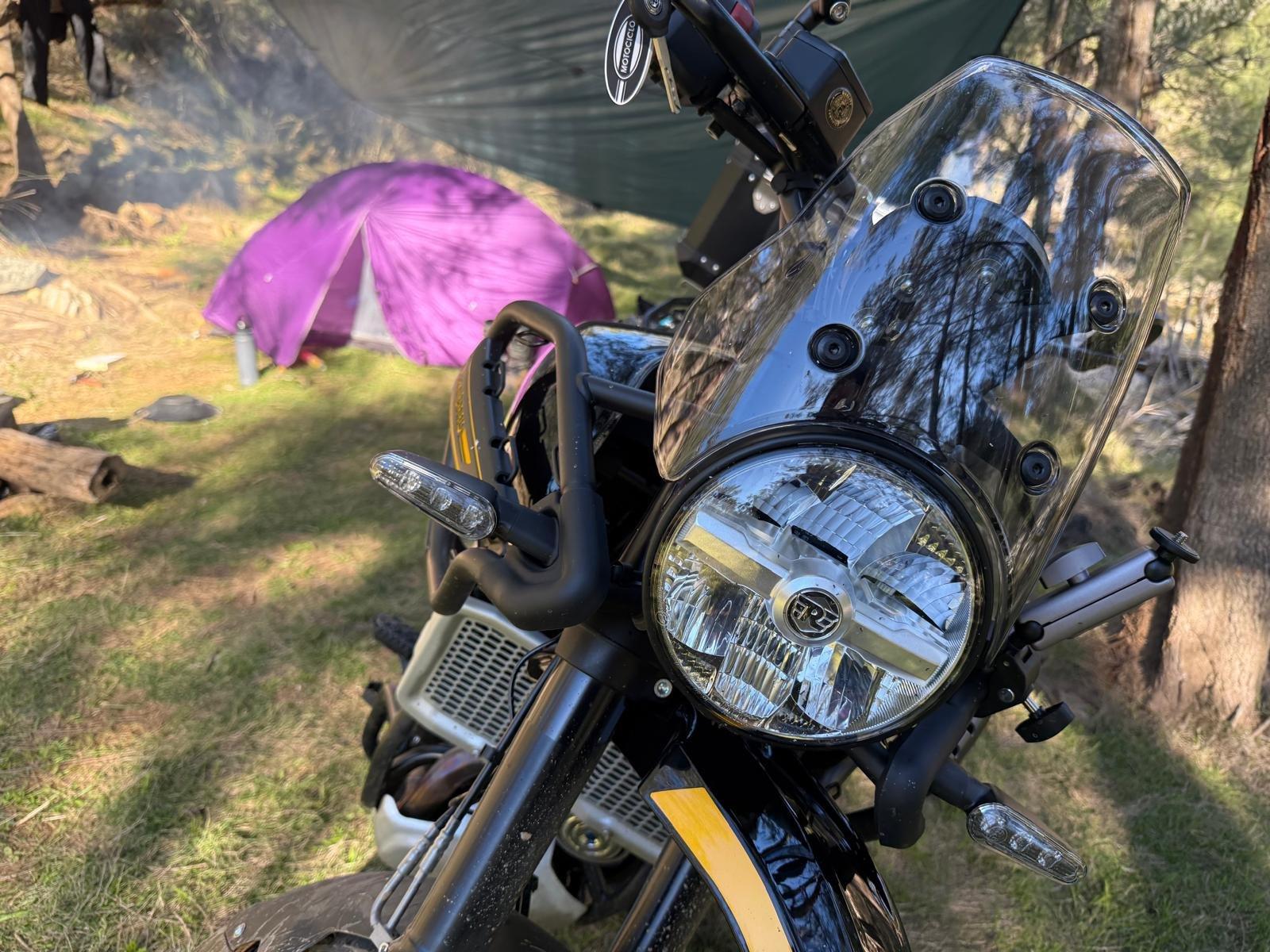
The pannier paperback for week three of the Tasmania trip was Matthew Walker’s Why We Sleep, which is the kind of book you read at the wrong time of life and wish you had read earlier. Walker is a sleep scientist at Berkeley. The book came out in 2017 and quietly rearranged the furniture inside a lot of people’s heads, mine included. It is a popular-science book, which means it argues a case rather than reporting a literature, and the case is this: sleep is not a passive thing the body does at night, it is the most important active behaviour of the twenty-four-hour cycle, and most of us, especially men in the second half of life, are quietly running it down to nothing.
I will not pretend the book is unimpeachable. It has had its critics — an independent statistician called Alexey Guzey published a long essay in 2019 questioning some of Walker’s strongest single-sentence claims, and Walker answered. The push and pull continues. What is not in serious dispute is the broad picture. Less than seven hours a night for an adult, sustained over weeks, costs you memory, mood, immune function, hormonal regulation, and the kind of fine-motor judgment that keeps a wheel inside a line. Eight hours is the floor most of us need. Six is the ceiling at which we start lying to ourselves about being fine.
Now to the bike. The single most under-discussed risk in long-distance motorcycling is fatigue. Helmets, ABS, hi-vis, dirt-tyre choice — these are the things riders argue about in forums. The thing that actually puts most middle-aged riders into a hospital bed is the moment late on day six of a tour when the head goes somewhere else for half a second on the entry to a corner that the head, well rested, would have read in advance. There is research from the Australian transport regulators that puts twenty-four hours awake at a cognitive equivalent of a 0.10 blood alcohol reading. You would not get on the bike at 0.10. People get on the bike after a four-hour sleep in a hot tent without a second thought.
Sleep is the part of the ride that happens with the engine off.
The chapters that mattered most to me, in order, were the ones on motor learning, on caffeine, and on alcohol. The motor-learning chapter is the one that explains why a skill you practise on Tuesday is sharper on Wednesday morning than it was on Tuesday afternoon. The consolidation happens in stage two of non-REM sleep, mostly in the second half of the night — the part you cut off if you set the alarm for 5 am after going to bed at midnight. If you are doing rider training, or working on trail braking, or learning to stand on the pegs through rough, the eight hours afterwards is doing the actual learning. Skipping it is like deleting the file you just saved.
The caffeine chapter is the one I underlined most. The half-life of caffeine is between five and seven hours, which means a strong coffee at four in the afternoon has half its dose still in the bloodstream at ten that night, and a quarter at four in the morning. The riders I know who say they ‘sleep fine on coffee’ are, almost without exception, riders who have not had a week of clean sleep in years and have therefore forgotten what fine actually feels like. The fix is dull and effective. Cut the caffeine after midday on the road. Drink the second flat white somewhere between ten and noon, then water until you stop for the night.
The alcohol chapter is the one that disappoints. A beer at the campsite is one of the genuine pleasures of the touring day. Walker’s point is unfortunately correct — alcohol is a sedative, not a sleep-aid. It puts you under faster and then fragments REM in the second half of the night, which is exactly the part that does the consolidation. One beer is fine. Three is a tax on tomorrow’s riding. The line is somewhere between. I am still triangulating mine.
What Walker did not write but the bike has taught me is that sleep on the road is a kit problem as much as a discipline problem. A decent inflatable mat, a quiet site, earplugs that actually seal, a sleeping bag rated for ten degrees lower than you think you will need, and the discipline to set up camp before the light goes. The hot-tent problem is real — pitch on the shaded side of the clearing, pitch early enough that the inside has cooled by sundown, and accept that summer touring in Australia means starting at first light and being off the bike by two for a reason.
The deeper claim of the book, the one Walker keeps circling, is that the modern social arrangement is built around the assumption that sleep is optional, and that the people who sleep less are the serious people. The startup founder, the surgeon, the long-haul rider knocking out twelve-hour days. None of this is true. The long-distance rider who lasts is almost always the one who plans short days, eats early, sleeps eight, and gets to the next coffee a kilometre or two before they needed it. The one who gets airlifted is almost always the one trying to make up time.
I now plan trips with sleep as a routing constraint, not a residual. Two-fifty kilometres is a good day. Three hundred is the ceiling unless the road is genuinely the easy kind. The tent goes up by five in summer and four in winter. The book goes into the panniers because that is what reading a chapter at dusk on a folding chair is for — the slow lowering of the heart rate that sleep needs you to do before it will arrive on time.
Read the book. Skip the introduction if you find Walker’s tone overstated, and go straight to chapter five. If you read one page that changes a habit, the book has already paid for itself in tyre miles you did not lose to a moment of inattention you could not afford.
Read this with Brave New World and the rest of the tank-bag library.
Get the next one
Twice a month. The next verdict and the next journey land here first — photographs, and where I’m headed next.